-
Anchorage Museum of History and Art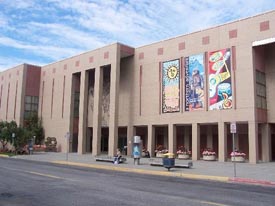
The Anchorage Museum at Rasmusen
Center in downtown Anchorage, Alaska, was first opened in 1968 with
borrowed paintings and 2500 historic and ethnographic items from the
historical society. The official name has become the Anchorage
Museum at Rasmusen Center and although it has bone through numerous
additions and expansions, it is now in the process of a $100 million
addition. The museum's goal is to share and connect Alaska with the
rest of the world via science, art and history. The first building
was 10,000 square foot using the 60 paintings, historical and
ethnographic relics and two staff members. Growing in leaps and
bounds, the museum now occupies 140,000 square feet and houses
21,000 relics and 450,000 historic photographs with 36 people
working there. The museum was accredited in 1973, and in 1992 was
made the Smithsonian NMNH Arctic Studies Center; that helps the
museum through displays, research and education. It has become a
world class museum in the center of the state's biggest city, and
has over 180,000 people coming here each year from across the world
and is the cultural hub for the local citizens. The museum has been
one of the top ten attractions in the state for many years, and has
16-20 rotating displays each year with numerous educational
activities and programs. Permanent exhibits include; Anchorage:
1910-1935, an interactive pictorial panel display that tells the
early 20th century in the city by photographs and stories told by
the citizens that lived them; and Art of the North with 7 galleries
showcasing the art of Alaska and the circumpolar north. These
include; Early Views of Alaska, Works by contemporary Alaska Native
artists, Life in the North, Landscape paintings, Paintings by Sydney
Laurence, one of the state' best known painters and Portraits, both
traditional and unconventional. The current exhibition will be added
to the permanent collections after it is finished, and this includes
their latest acquisitions; with 250 items that include historical
items, paintings that include a Sydney Laurence work, ethnographic
objects and photographs, which will double their present inventory;
as well as the political cartoons of Peter Dunlap-Shohl. The Alaska
gallery on the second floor, is 15,000 square feet and is home to
many diverse holdings that include; early exploration, whaling in
the arctic, government, the gold rush in Alaska, Alaska railroading,
early Anchorage, fishing and salmon canneries, Alutiq and
Aleut/Unangan, Athabascna Indian history, northwest coast Indians,
Alaska at War, the 1964 earthquake and oil/transalaska pipeline.
|