-
Arabia Steamboat Museum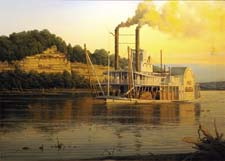
The Steamboat Arabia, a side
wheel steamboat hit something in the water of the Missouri River in
1856 and sank by Parkville, Missouri. Many thousands of relics were
recovered from the steamboat and its cargo that is displayed at the
Arabia Steamboat Museum in Kansas City, Missouri. The Missouri River
was once described as being too thick to drink and too thin to plow;
but it was one of the fastest and safest ways to go west in the
early days of this country. But it could be dangerous and hard for
the captains and helmsmen of these wonderful boats as they plowed
westward; unsure of what lay around the bend in the river. The
Arabia was built in Brownsville, Pennsylvania in 1853, measuring 171
feet long and able to hold 222 tons of cargo. Going against the
strong currents of the Missouri, the double 28 foot paddlewheels
could force the steamboat upriver at a speed of 5 miles per hour,
which was a good speed in those days. It soon acquired a good
reputation for comfort, speed and safety. Then, one day, laying just
below the waterline, a huge trunk of walnut had got caught in the
sludge below and it was in the path of the oncoming Arabia. The ship
sunk and for the next 132 years, the silt and thick black soil of
the plains covered the site. Trying to locate the ship's hull would
be a difficult task, but after various drillings, the hull was
discovered and the area marked. Backhoes, bulldozers, well-drilling
equipment and a 100 ton crane were brought to the riverside to bring
this old ship up. The museum gives visitors a magnificent idea of
what the past was like, as the collection of relics showed the life
of early frontier people, like few other finds have done. There is a
guided tour to help you understand more of the life and hardships
found back then, with a wonderful video show of how the vessel was
found and raised. The wonderful treasure that was found is there for
you to see, explore and enjoy. Boots and baskets, keys and bells,
dishes and barrels, pictures and frames, ceramics and silverware, a
doll and lamps, old matches inside small wooden containers, coins
with the 1856 date, pottery and tea pots, clay pipe bowls,
beautifully engraved powder horns, clothes and accessories, hats and
racks of utensils; all this and so much more. A marvelous menu of
relics and antiquities that will amaze and delight you.
|